



Digital piano: why it’s the right choice and how to choose one

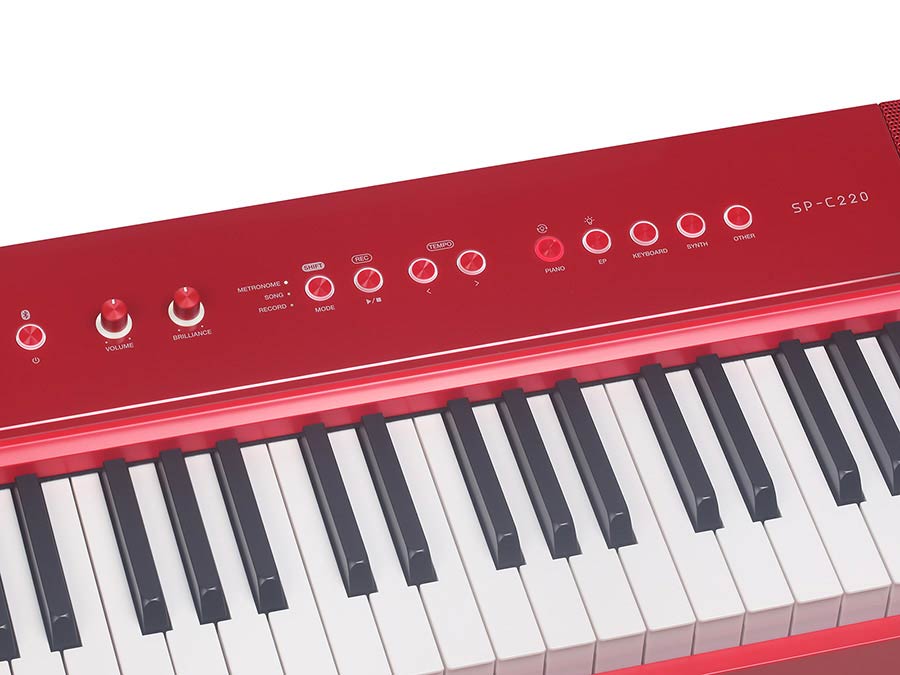
The digital piano: a technological revolution
The digital piano has come an extraordinary way since its beginnings. Today’s models offer a realism of sound and touch that rivals acoustic pianos, while bringing considerable practical advantages. But how do you choose the right model from everything on offer? Discover our selection of digital pianos and find the instrument that suits you.
The advantages of a digital piano
No maintenance
Unlike an acoustic piano, which needs regular tuning (generally twice a year), a digital piano always stays perfectly in tune. Over the long term, that is a significant saving of time and money.
Adjustable volume and headphone playing
Being able to adjust the volume or play on headphones is a major advantage, whether for rehearsing late at night without disturbing the neighbours or for concentrating in a noisy environment. Studio headphones give a faithful sound reproduction that lets you enjoy every nuance of your playing.
Compact and lightweight
A digital piano weighs on average between 10 and 60 kg depending on the model, compared with 200 to 500 kg for an acoustic piano. Some portable models can even be taken to gigs and rehearsals.
Sound versatility
Modern digital pianos offer much more than just a piano sound: organs, harpsichords, strings, choirs and many other sounds are available at the press of a button. Crumar pianos, for example, are renowned for the exceptional quality of their vintage organ sounds.
How to choose: the key criteria
The touch
This is THE number one criterion. A good digital piano must have a weighted-key keyboard with hammer action, reproducing the feel of a real acoustic piano. 88-key keyboards are the standard for a serious pianist. Dexibell pianos, a high-end Italian brand, excel in this area thanks to their advanced sampling technology.
Polyphony
Polyphony refers to the number of notes the piano can produce at the same time. A minimum of 128 voices is recommended for comfortable playing; top-of-the-range models go up to 256 voices or more, which avoids any notes being cut off in complex passages with the sustain pedal.
Connections
Check for audio outputs to connect your piano to an amplifier or a PA system, a headphone socket, a USB port for connecting to a computer (music production) and possibly an auxiliary input for playing along with a backing track.
Our recommended brands
We have selected three brands that represent the best of the digital piano:
Medeli pianos offer excellent value for money for students and amateur pianists. Their range covers every budget, from entry-level models to professional stage instruments.
Crumar pianos are aimed at musicians looking for authentic organ sounds as well as piano, ideal for jazz, progressive rock and church music.
Dexibell pianos are the Italian benchmark for demanding pianists, with a sound quality close to that of a concert grand.
What about the arranger keyboard?
If you are looking for an even more versatile instrument, arranger keyboards include automatic accompaniments, rhythms and hundreds of sounds, perfect for entertaining or composing. They do not replace a piano for technical work, but they are excellent creative companions.
Conclusion
The digital piano is now a perfectly legitimate choice for any pianist, from beginner to professional. Its versatility, its lack of maintenance and its connection options make it a thoroughly modern instrument. Contact us to try and compare our models.




 Discover the shop