



The Ischell brand of microphones and pickups

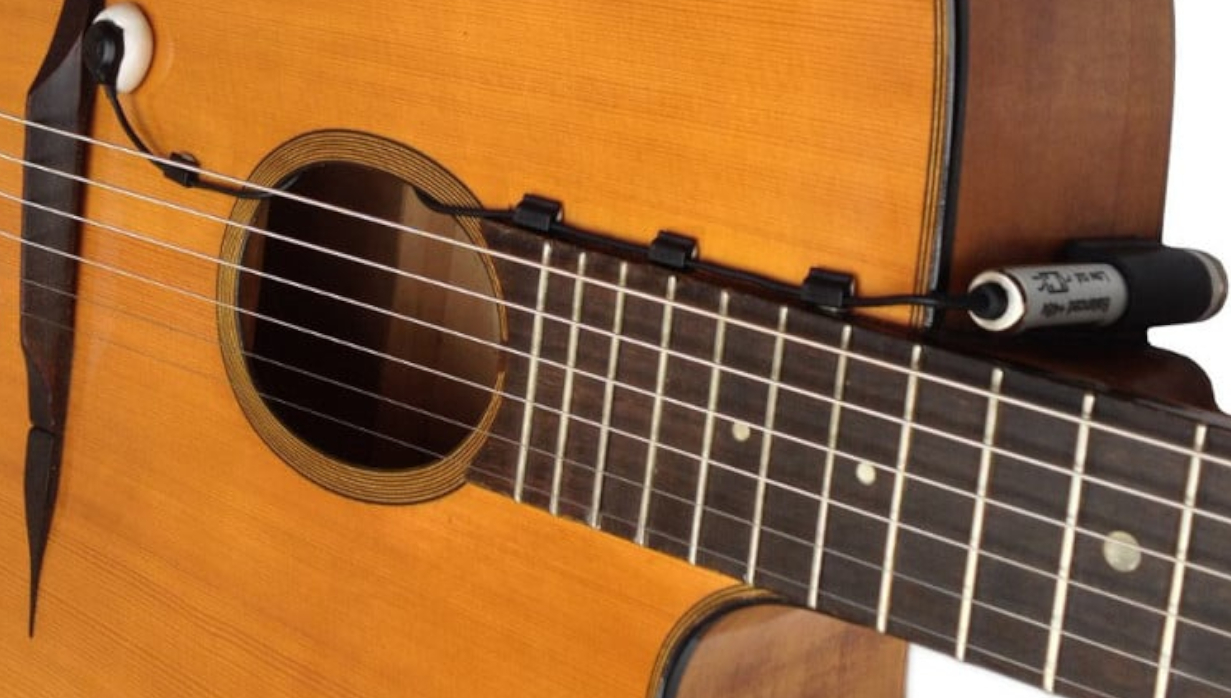
The Ischell brand of microphones and pickups has become a reference for acoustic musicians looking for simple, reliable, discreet amplification solutions suited to acoustic and classical instruments, but also pianos and various world instruments. This practical blog presents the types of Ischell microphone, their uses, installation, anti-feedback tips and recommendations for achieving a natural sound on stage or in the studio.
1) Types of Ischell microphone
– Contact microphones (contact pickups): stuck or fixed to the top or the bridge using a specific audio adhesive paste, they pick up the mechanical vibrations of the instrument. Ideal for guitar, mandolin, violin, cello, double bass, oud or kora. The sound is comparable to an internal microphone in terms of fidelity, warmth, width and air. With the acoustic isolation and feedback resistance of a piezo pickup, allowing you to play at high levels on stage;
– Internal microphones: these are miniature condenser microphones with a design made to sit as close as possible to the sound of the instrument. They pick up the acoustic radiation (more natural than a piezo) and are placed near the soundhole, the bridge or inside the body depending on the instrument: they suit many stringed instruments, they can also be placed as a complement to a contact pickup, and they reproduce the sound of your instrument naturally, faithfully and precisely:
2) Important technical characteristics:
– Impedance: piezo pickups are high-impedance; use suitable preamplification (active box or DI preamp) to avoid a “brassy” sound.
– Power: some electret microphones require 9V or 48V phantom power via a preamp. Check compatibility with your preamps/DI boxes.
– Connectors: 1/4″ jack, mini-jack or XLR depending on the model. Good-quality cables and connectors limit noise.
– Directivity: internal microphones have a pickup pattern (omni/cardioid) that influences how the audience and room ambience are picked up.
3) Installation – best practice:
– Clean the surface before sticking (isopropyl alcohol, a small amount).
– Place the piezo pickup on a vibrating area (under the bridge, near the top); try several positions to find the best compromise between attack and bass.
– For internal microphones, aim slightly towards the sound source (strings near the bridge for attack, soundhole for warmth).
– Use non-permanent mounting tape if you want to reposition it without damaging the instrument.
– Do a test in stage conditions (with monitors) to limit feedback.
4) Feedback prevention and live settings:
– Place your monitors below or to the side, not in front of the internal microphone.
– Use a preamp with parametric EQ: cut just the problem frequencies (often 1–4 kHz) rather than applying broad boosts.
– Anti-feedback: multiband limiters and light gates help live.
– Gain setting: prefer a low gain and raise the EQ to preserve natural dynamics.
5) Quick comparison: piezo vs internal microphone vs hybrid
– Piezo: excellent treble response, good isolation, but can lack warmth.
– Internal microphone: more natural, “open” sound, more sensitive to monitors and room ambience.
– Hybrid: versatile; often needs a split mix (blend) to get the best out of each pickup.
6) Studio recording tips:
– Record the Ischell microphone + an external (condenser) microphone on two tracks, then blend them to add body and ambience.
– If you have a DI connection, record the direct (clean) track and a processed track (EQ, light saturation) for more possibilities in the mix.
– Think about the envelope and mic placement: a close microphone picks up the attack, a more distant one captures the resonance.
7) Care and durability
– Avoid excessive humidity and large temperature changes.
– Inspect cables and connectors regularly. Ischell models are designed for the stage, but maintenance prolongs their lifespan.
8) Who is it for?:
– Acoustic/classical guitar/resonator: contact microphone under the bridge
– Harps: contact microphones
– Piano: contact microphones on the soundboard
– World instruments (oud, saz, kora): well-positioned contact microphones
– Violin/viola: internal microphone or discreetly mounted contact microphone to preserve the natural colour.
Quick FAQ
– Do you need a preamp? Yes for most piezo and electret models, as it optimises impedance and gain:
– Does sticking on a microphone damage the instrument? No. Be sure to use the Ischell audio adhesive paste, suitable for all Ischell contact microphones:




 Discover the shop
Hello, I acquired the FWF MB750 preamp in June 2006 on the recommendation of MM, a luthier in Hauts-de-France, and can only be delighted with it, as the sound of my double bass plugged into a Gallien Krueger MB150 III transports me every time I use it.