



Why choose a digital piano: our 3 essential reasons

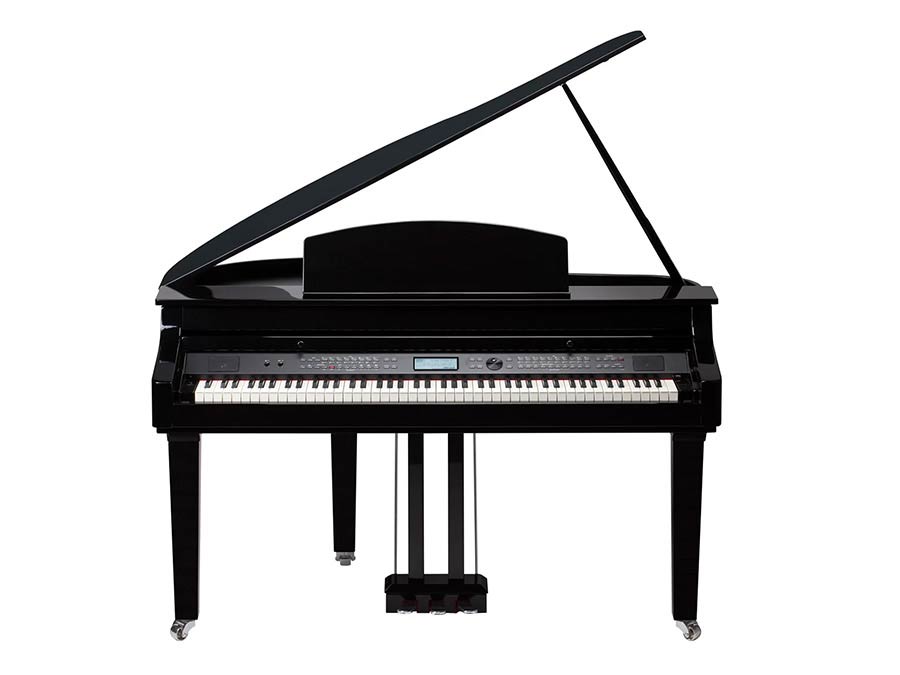
How does a digital piano work? That is the first question to ask yourself in order to choose this type of instrument well. It differs from acoustic pianos, which use strings and hammers to produce sounds. A digital piano, for its part, uses electronic sensors to reproduce the sound according to the pressure applied to the keys. Playing modes, harmonics and amplification can also change your musical practice. Why might buying this instrument be worthwhile?
1. The advantages of a digital piano
Maintenance
First of all, it is far less fragile than an acoustic piano, whose varnish can suffer from heat, light or temperature variations. The temperature must be kept between 18 and 23 degrees so as not to damage the strings or the woodwork. Humidity is not a problem either. For a more traditional instrument, the humidity level in a room should be between 50% and 60%.
These precautions can quickly become a constraint, depending on whether you have to increase or absorb humidity, or heat or cool the room. You will not have these problems with a digital piano, which copes with a wider range of environments. Do, however, keep it away from dust and direct sunlight.
Finally, there is no need to tune your instrument. This upkeep, carried out once or twice a year, costs around €100 on average. Here, you will not need to set aside that budget to keep your instrument in good condition. Just plug it into a standard 220 V mains socket and your instrument is ready to play.
Weight
Next, its weight makes it easier to move or to take with you when relocating. An upright piano can weigh as much as 600 kilos, whereas a digital instrument is far lighter. The Medeli Grand510BKPiano grand piano, for example, weighs 6 times less, yet keeps the elegant look of a grand piano.
Less bulky at 40 kg, the Medeli DP260 RW is also a handy way of taking your instrument with you more easily. It is practical for musicians who travel often, for example.
Do you want something that is even less bulky while keeping good sound quality and versatility in use?
Digital keyboards may be a good solution for you, whatever your goal. The Crumar Parsifal, for example, will delight professional musicians and enthusiasts who play regularly alike.
2. An instrument that fits in with family life
Size
Wondering where to put a digital piano? An acoustic piano measures between 1.60 metres and 2.50 metres, whereas a compact digital model is much more modest in size. It therefore takes up less room and suits flats, studios, small rooms and other tight spaces perfectly.
Arranger keyboards are also a solution for music lovers and performers.
Fewer disturbances
Can you imagine hearing a family member practise their scales for hours on end? No? No problem with a digital piano! It solves all the noise problems that are sometimes inherent in the piano. You can play with headphones or adjust the volume so as not to disturb the people around you or the neighbours.
With its flexibility, adaptability and interactive side, it suits children and adults at every stage of learning.
A fun instrument
The different sounds on offer and the many playing modes give you plenty of options that you can try out as a family.
You will be able to reproduce the sounds of other instruments such as the electric piano, vibraphone, strings, accordion and various organs. It is the ideal instrument for introducing every member of a household to music.
3. A choice of the best digital pianos
Quality products
Portable, cabinet, hybrid or arranger: there is no shortage of choice for players.
Buying a digital piano does not mean investing in lower-quality equipment. Manufacturers such as Crumar, Medeli and Dexibell now offer attractive products at much more affordable prices than an acoustic piano.
All the more so as some models come close to more expensive products. The Medeli Grand510 grand piano looks the part of a grand piano, notably with its K8 keyboard, which recalls its touch and feel. Sound quality is also an undeniable advantage, thanks to its 2 x 60 watt speakers and its amplifier.
Polyphony is also an important parameter. While it is advisable to opt for a minimum of 128 voices, products such as the Medeli DP650K have 256.
Technological products
Some are real concentrations of technology. The Medeli Forte DP650K, for example, contains the new A5 processor. Its 88-key hammer-action keyboard with three sensors enhances the musician's experience.
Many digital pianos also let you adjust the sensitivity of the keyboard sensors. You can thus vary how you play your scales, from the most dynamic to the most restrained.
It is also possible to vary the reverb, that is, how long the note lingers after it has been played. The acoustics produced differ depending on the musician's choice.
Want to recapture the sonic authenticity of an acoustic piano? The Dual Harmony function of the DP280K offers you this possibility, with its sustain pedal that simulates the resonance of the strings and the soundboard.
Many other features
By choosing this type of instrument, you will find a wide range of functions and connections that add variety to your pieces:
- USB audio socket: plug in the instrument and play your favourite tune
- MIDI (Musical Instrument Digital Interface) for transferring data between instruments or software
- Bluetooth connection
- MP3 player and recorder
- Microphone input
- iPad app
- Built-in metronome
As you will have gathered: not a single wrong note when starting out on the piano with a digital model, and no chance of getting bored! Every product is different. All that is left is to visit the shop and compare the offers, or to contact us for more precise information depending on your goal.




 Discover the shop