


How do you choose your first acoustic guitar?

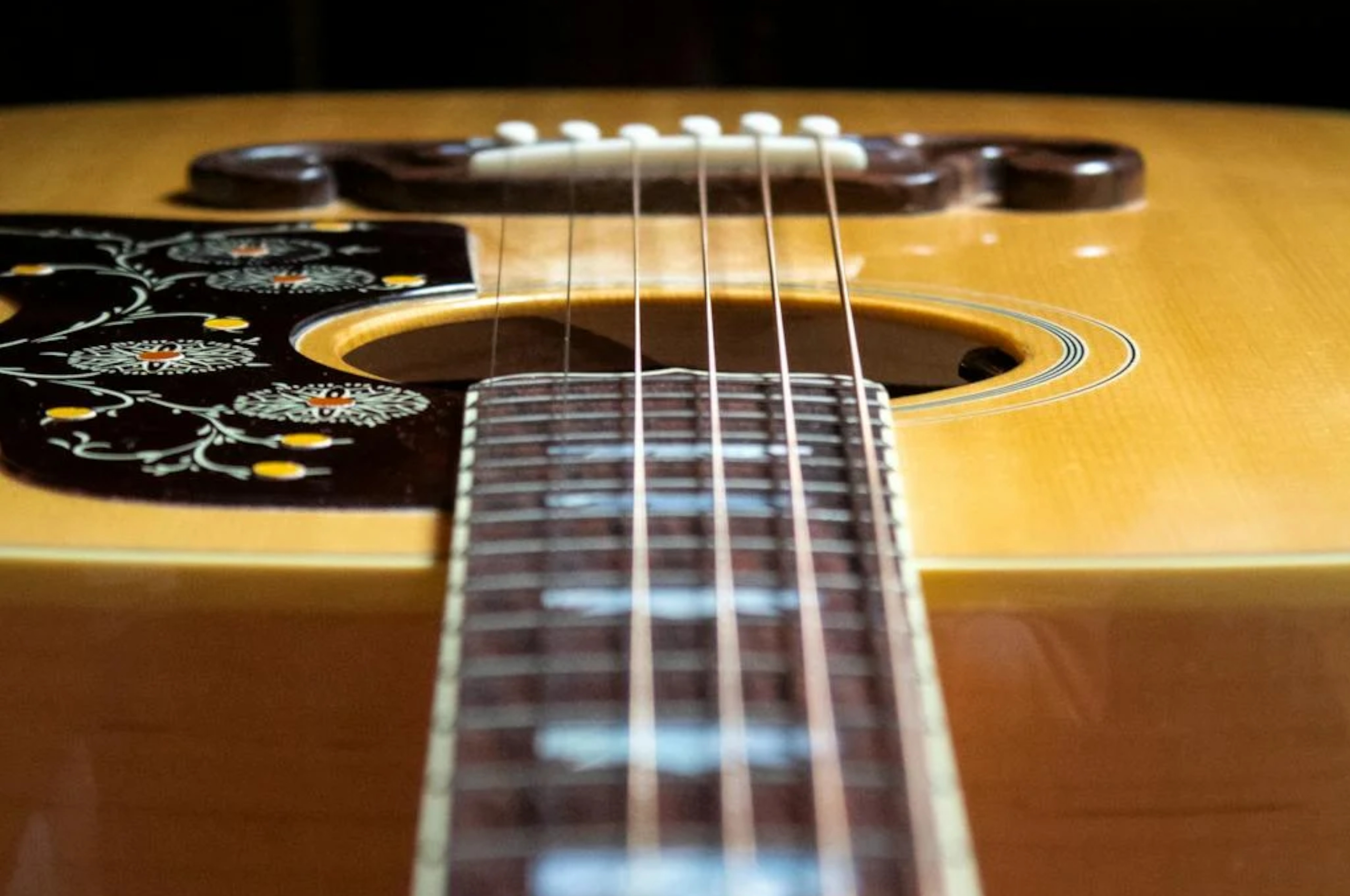
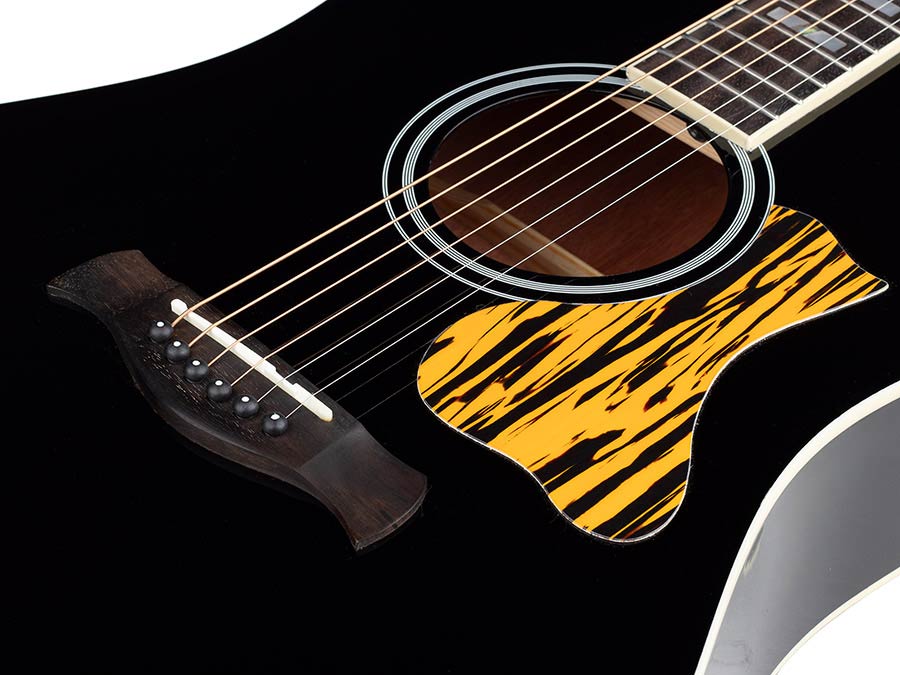
Richwood Heritage Series HSDS-42-BK Dreadnought Guitar
To choose your first acoustic guitar well, certain criteria need to be studied carefully. There are many models with different necks or even shapes. In addition, the body of the guitar can also differ according to its size or the wood used in making it. Finally, the right choice depends on your build, the style of music you want to play and above all the pleasure you will take in working on your chords and harmonies once you have this stringed instrument in your hands!
Know its particularities to choose your first acoustic guitar well
It generally has a larger body than its classical counterpart. Its powerful, resonant sound can vary depending on the woods used.
Their metal strings can admittedly be harder on your fingers if you are just starting the guitar, but their bright, powerful sound is perfect for playing folk or rock. To begin with, choose strings in a 10-46 or 10-47 gauge, which are less difficult to handle. Then, once you are comfortable, you can move on to heavier gauges such as 11-52, 12-54 or even 13-56 for jazzier pieces.
What is more, its narrower neck and more pronounced radius (the curvature of the fingerboard) reduce the stretch between the fingers and make barre chords easier, which are trickier on classical necks.
Playing techniques such as strumming (generally with a pick on an acoustic guitar) or fingerpicking also come into their own on it.
The sound of this guitar suits the most commonly heard and widespread tunes.
Getting to know the shapes of acoustic guitar
There are several guitar shapes, each with its own characteristics. The shape of the body will influence the sound: the bigger it is, the more powerful the sound. It is also important to choose one that suits your build.
1. The dreadnought
This is the most common shape. It suits musicians with a rather aggressive or dynamic playing style. Because of its depth, it is not very well suited to players of smaller build, such as children, for example.
The Richwood Heritage Series HSDS-42-BK Dreadnought guitar reproduces this warm sound, which comes from powerful bass and mid-range. Its versatility makes it an ideal instrument for beginners.
2. The parlour guitar
Looking for a less bulky guitar? The parlour is made for you! This “parlour guitar” is one of the more modest models, which makes it easier to carry. It is ideal for playing anywhere, alone or in a small group. These instruments have a retro look that takes us straight back to the 19th century, like the Richwood Master Series P-50 Parlor Guitar.
3. The Manouche (gypsy jazz) guitar
A little less well known than the previous two, the Manouche guitar became known in Europe through its illustrious exponent Django Reinhardt. This guitar has a smaller oval soundhole and a special bridge that give it excellent sound projection. All these characteristics are found in the Richwood Manouche Jazz RM-70-NT guitar.
There are other models such as the Jumbo, the Auditorium, the Orchestra and the Round Shoulder.
Identifying the types of wood to choose your first acoustic guitar well
If you intend to keep your acoustic guitar for a long time, you need to think about the choice of wood. A guitar with a solid wood top will always last better over time. It is worth taking this criterion into account even if you are a beginner, all the more so as this feature is often available even at entry level. The saving you would make with reconstituted, re-glued or laminated wood will not pay off.
On the market, there are two main species, each with its own characteristics:
- Spruce: the harmonic spectrum here is very broad, which is useful for energetic playing. Versatility is its main asset.
- Mahogany: the high end will be more restrained here, but you will find more roundness and warmth in the mid-range.
Knowing the difference between an acoustic and an electro-acoustic guitar
This is something you need to know in order to make an informed choice. The sound of the acoustic guitar is amplified solely by the soundbox. That is more than enough if you want to play for yourself or among friends.
On the other hand, an electro-acoustic becomes indispensable for other uses. It has a built-in pickup in the soundbox and needs an amp, which makes playing on stage or recording easier. It also avoids feedback when recording.
Despite the difference in price, choosing an electro-acoustic can pay off if you are planning varied musical use. In that case, the Richwood Master Series D-20E Dreadnought is a good product, which you can see in a demo.
Thinking about the small details to choose your first acoustic guitar well
Once you have thought about the style you want to play and the sounds you want to hear, you can quite happily learn to play the guitar on your own.
Think about the details that will make that little extra difference to your pieces.
For example, a cutaway will give you easier access to the upper frets and therefore to high notes, as on the Richwood Grand Auditorium Master Series G-20CE.
Looking after your stringed instrument
Have you chosen your model? Perfect! Now you need to look after it! To do that, remember to:
- clean it regularly: with a soft, dry cloth, preferably microfibre,
- tune it often: buy a guitar tuner or download an app to tune your instrument before playing,
- check the strings: the more you play, the faster the strings wear out. Keep an eye on them,
- protect it: protect your guitar from dust, humidity and temperature changes. It is better to store it in a gig bag than to leave it out in the open.
For any other questions, do not hesitate to visit our shop or to contact us; we will be happy to answer your questions!



 Discover the shop